A fractional general counsel (fractional GC) is a senior lawyer who acts as a company's general counsel part-time, often on a monthly retainer.
You get the most from one by keeping their limited hours for advice, negotiation and decisions, and by moving routine work off their desk.
What does a fractional general counsel do?
The work of a general counsel, in fewer hours. That commonly includes, among other things:
- Advising leadership. Guidance for the executives and the board on legal risk, tied to what the business is trying to do.
- The contracts that matter. Negotiating commercial contracts, and setting standard positions so routine deals can close without them.
- Outside law firms. Choosing them, scoping the work and keeping an eye on the spend.
- How legal runs. Templates and a clear way for requests to come in.
Compliance, employment questions and fundraising come up often too.
A fractional GC also decides. The role involves making decisions, leading teams and seeing a strategy through.
And they are the company's lawyer. A fractional GC holds a license to practice and carries professional indemnity insurance. They keep the company's information confidential and check for conflicts across the companies they serve.
How much does a fractional GC cost?
Less than a full-time general counsel, because the business pays for part of a senior lawyer's time. The usual arrangements are a monthly retainer for a set number of hours, or an hourly rate.
Published prices are rare. One US marketplace for fractional hires does publish a benchmark, built from its own job posts and candidate profiles over the last 90 days.
It puts the middle half of fractional GC rates between $175 and $300 an hour. That is one company's data, so read it as a rough guide.
For comparison, take a full-time hire. A 2025 US survey of in-house legal professionals reports pay for general counsel who are their company's only lawyer. Their median base salary was $234,000, before bonus and benefits.
The rate is the easier half. Estimating how much time the business will need is harder, and that estimate sets the retainer.
Which work should a fractional GC keep?
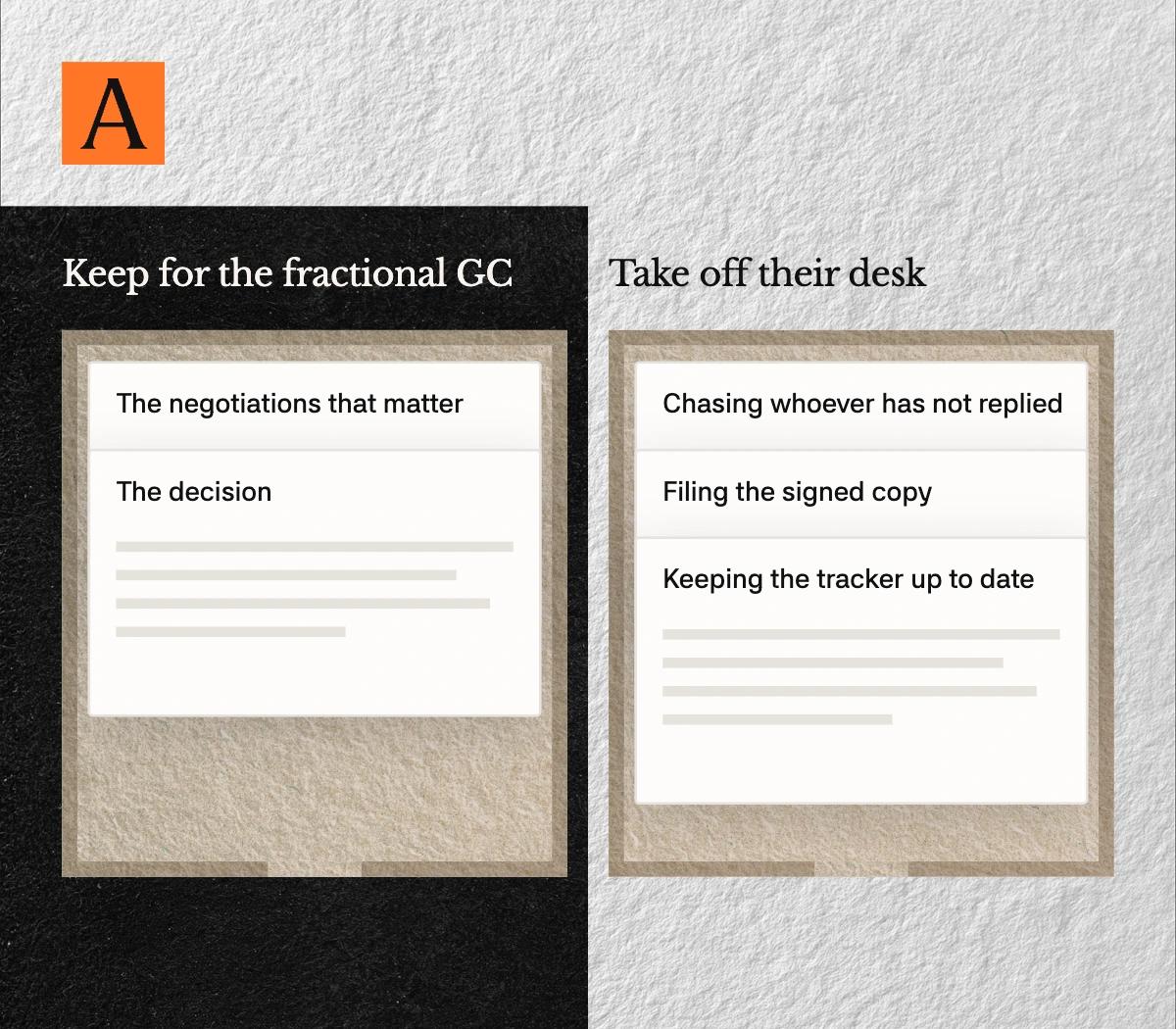
The work that needs a senior lawyer. That means advice the business will rely on, the approach to a dispute, a regulator or a major deal, and negotiations where someone has to make a call on the spot.
A fractional GC can do routine work. With a set number of hours, though, each one spent on a standard NDA is an hour away from the negotiation that needs them.
The right-hand column can go to someone in the business, a paralegal or an AI paralegal. Whoever takes it works from the GC's positions and brings back what falls outside them.
How do you set a fractional GC up to work well?
Three habits help, among others.
- Agree what counts as urgent. A fractional GC serves several companies, so they may not be on hand the moment something urgent lands. A structured retainer is one way to manage that. Agree which matters need a same-day answer, and how to reach them when one comes up.
- Have them write the positions down once. Hours spent on a playbook come back each time a routine contract closes without them.
- Give requests one way in. One channel and a live tracker save paid hours that would go on finding out where things stand.
Where does an AI paralegal fit beside a fractional GC?
An AI paralegal does the routine work around legal matters. That includes reading a contract against agreed positions, drafting from a template, chasing an approval and getting a document signed and filed. It works within instructions a person sets, and judgment calls go back to that person.
The GC sets the positions and the approval rules. The AI paralegal applies them to each contract and brings back what falls outside them, so the GC's hours go to exceptions and advice.
What does Alaro take on?
Alaro is our self-serve AI paralegal, built by lawyers. Send it a task by email, Slack, Teams or WhatsApp. Beside a fractional GC, these kinds of work fit well:
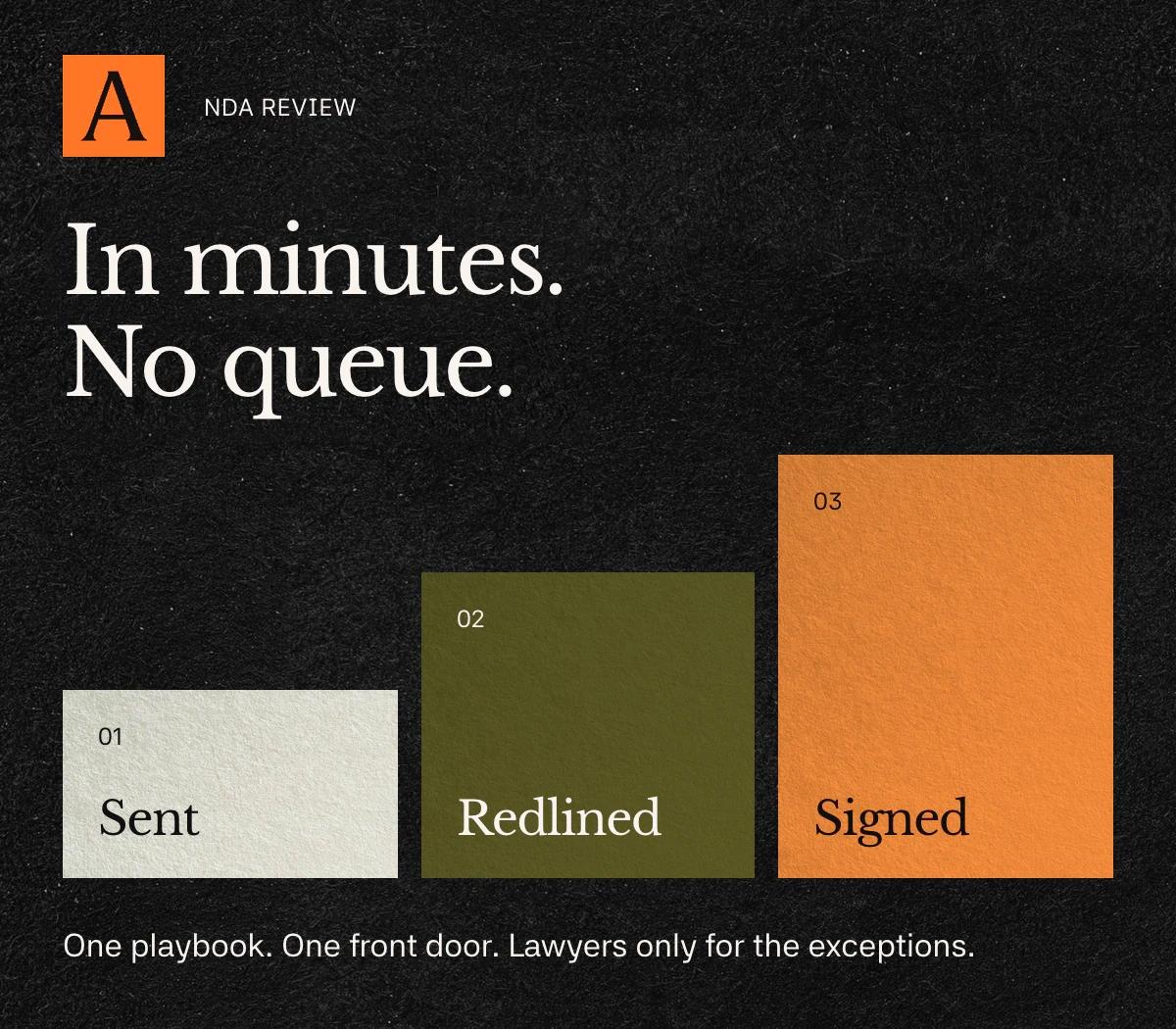
- Contract reviews. Alaro reads each contract against your playbook and flags anything outside it.
- The playbook itself. Alaro keeps your playbook and templates current, and you approve each change first.
- Status. A live tracker shows what has moved, what is stuck and where a decision is needed.
- Anything else. Send any other task that is taking more time than it should.
Alaro asks when instructions are missing or a request falls outside your rules. Decisions about strategy, risk and approval stay with you and your lawyers.
We are an SRA-regulated legal AI company. Our in-house lawyers monitor quality and double-check work that is escalated internally.
You can also ask for a specialist review by a regulated, insured lawyer, after you approve its scope and fee. That is a review of one matter. It does not make Alaro your general counsel.
You can start free with one routine task.
FAQ
What is the difference between a fractional GC and an interim GC?
An interim general counsel is brought in for a fixed period, often to cover a vacancy or a transition. A fractional general counsel works part-time on an ongoing basis.
Is a fractional GC the same as outside counsel?
No. Outside counsel is a law firm or lawyer instructed on a particular matter. A fractional GC works inside the business across its legal needs, and is often the person who instructs and manages outside counsel.
When is a fractional GC no longer enough?
When legal work fills every week of the year, a full-time general counsel makes more sense. Building the legal function is often part of a fractional GC's role, and that can include hiring the first full-time legal role.
Sources
- Debbie Thomas for the International Bar Association, How fractional GCs are reshaping legal leadership, In-House Perspective, September 11, 2025.
- Association of Corporate Counsel and Empsight International, 2025 Law Department Compensation Survey: Executive Summary, 2025. US data from 1,632 respondents, effective March 1, 2025.
- Go Fractional, What Is a Fractional General Counsel? Role, Cost & When to Hire One, October 30, 2026, updated November 2, 2026. A marketplace for fractional hires; the rates are its own benchmark.
- Stephen Embry for Above the Law, Fractional General Counsel: A Win-Win Proposition For Certain Clients, And Certain Lawyers, July 9, 2026.
- John Spinosa for Taylor Root, Should you hire a fractional or interim General Counsel?, November 14, 2024. A legal recruiter.