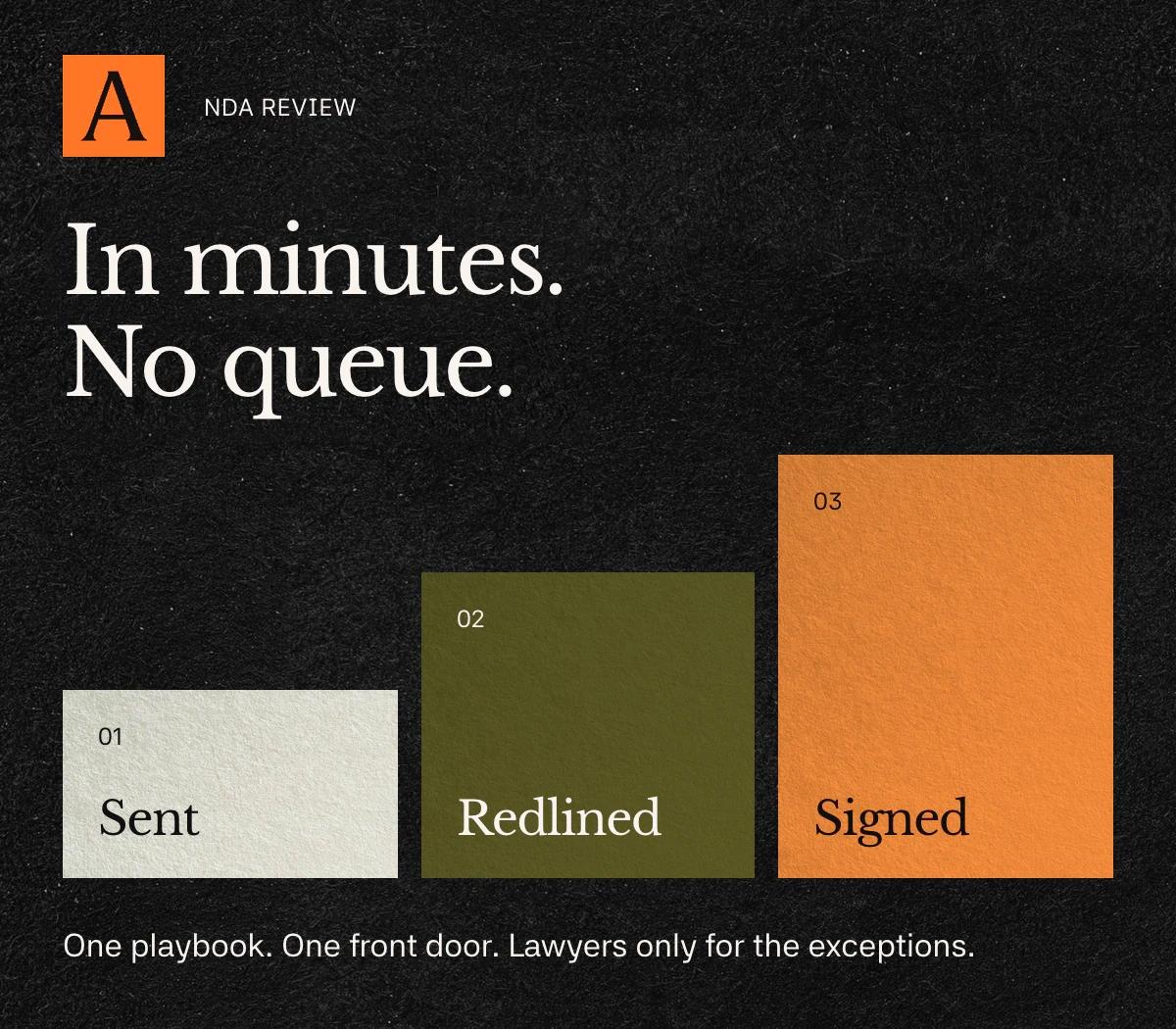
On its own, no. Contract redlining software marks up the draft, and a deal from redline to signature also needs a counter sent, a wait, a reread, an approval, signatures and filing. An AI tool runs contract work end to end when it carries the deal between those steps, and a person decides at set points.
Negotiating with counterparties and chasing signatures are the hard parts, because both depend on other people replying. Alaro runs both the functions, inside the limits of your playbook.
What does one deal look like with contract redlining software, and with Alaro?
Say your company sells software on a two-year subscription, and a new customer's legal team returns your agreement marked up. You have a playbook, which records your standard position on each clause and how far you will move. Here is that deal told twice, once with contract redlining software and once with Alaro.
With contract redlining software
With Alaro
With contract redlining softwareThe redline lands. You open the customer's mark-up in Word and run the software. It reads each change against your playbook and suggests a response. You go through its suggestions one by one.
With AlaroThe redline lands. You forward the mark-up to Alaro with the deal value and the points you will not move on. Alaro reads every change against your playbook.
With contract redlining softwareThe counter. They want 60 days to pay, and your playbook allows 45. The software proposes your fallback wording. You accept it, write the cover note and send both.
With contract redlining softwareThe ask beyond your limits. They also want the right to end the contract at any time on 30 days' notice. The software flags it as outside your playbook. You write up the ask and take it to whoever can approve it.
With AlaroThe ask beyond your limits. Alaro does not concede it. It brings you the ask with a recommendation, and the decision is yours.
With contract redlining softwareSilence. A week passes with no reply. The software works on documents, so chasing is yours to remember.
With AlaroSilence. Alaro follows up until the next draft lands. Whether to pick up the phone is still your call.
With contract redlining softwareTheir second draft. It arrives looking clean. You run it through the software and compare it with the last round, because tracked changes show only the edits someone chose to track. The renewal notice period has moved from 60 days to 90.
With AlaroTheir second draft. Alaro compares it with the last round and shows you what moved. The renewal notice period went from 60 days to 90 with no mark-up. You decide what to do about it.
With contract redlining softwareAgreed. One last read against everything that was agreed, down to each schedule, name and date. Then you send the final version for approval.
With contract redlining softwareSigned. You move to your e-signature tool, set up the envelope, chase each signatory and save the signed copy. Then you note the renewal date somewhere you will see it.
Anything outside your playbook is flagged, never changed quietly. An ask beyond your limits comes to you with a recommendation, and you decide.
Which one fits your team?
If your lawyers want to do the redlining themselves, consider contract redlining software. If you want one system, controlled by legal, for every contract, consider a contract platform. Alaro fits when the time goes on replies, chasers, approvals and signatures.
At Antavo, the CFO or the compliance manager approves every final version. We then send it through DocuSign, chase countersignature and file the signed copy in Antavo's contract repository.
You can start free and send Alaro the next mark-up that lands on your desk.
FAQ
What is contract redlining software?
Contract redlining software marks proposed changes on a draft for you, usually as tracked changes in Word. To redline a contract is to mark those changes so the other side can see them. The name comes from marking up paper contracts with a red pen, and a redlined contract is one that carries those marks.
Does a lawyer check each counter before it goes out?
Not as a matter of course. Our in-house lawyers monitor quality and double-check work that is escalated internally. That is different from a lawyer reviewing your deal. When you want that, ask for a specialist review by a regulated, insured lawyer, with the scope and fee approved by you first.
Do we need DocuSign to get a contract signed this way?
It helps. Alaro is integrated with DocuSign, so it sets up, sends and tracks each envelope directly. It can also work with other e-signature tools, or with wet ink where a document needs it.
Sources