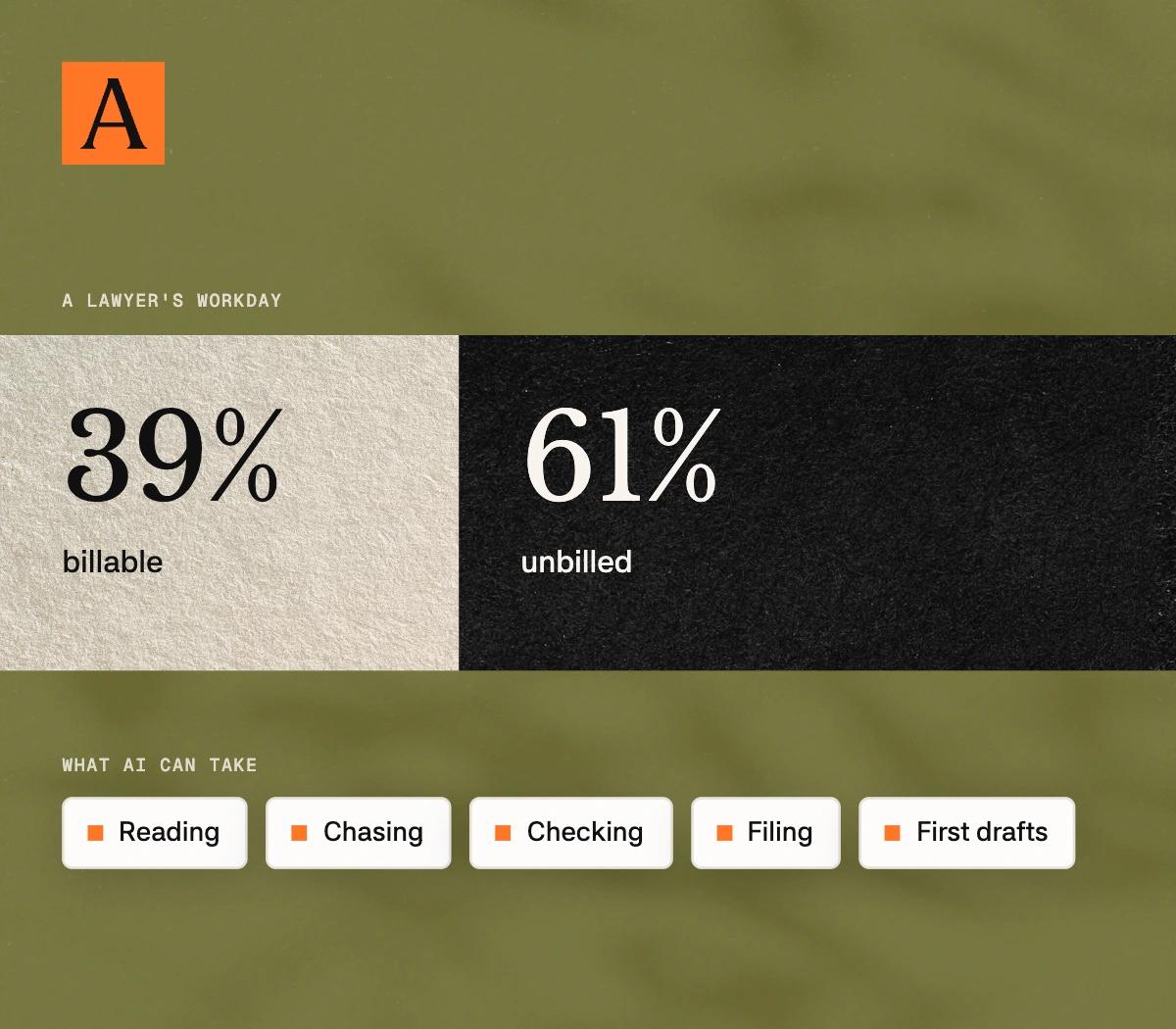
Lawyers spend much of their day on work that needs no legal judgment. Across law firms using one practice management system, only 39% of a lawyer's workday was recorded as billable in 2025. That leaves 61% of the day unbilled. AI for lawyers is most useful on the reading, chasing, checking, filing and first drafts around a matter, which frees more of the day for judgment.
AI can take much of that off your desk. The final call, and the answer for what goes out under your name, stay with you.
Is AI giving lawyers time back?
The early numbers point that way. The billable share of a lawyer's day is projected to reach 42% in 2026, the largest annual rise in the eleven years the research has run, as AI becomes established in legal practice.
The people doing the work describe it the same way. In the same research, 68% of legal professionals said AI has reduced tedious work.
What does AI for lawyers do well?
Work with a clear input, a clear output and a way to check the result. Most of the work around a matter fits that description.
Some of this work is billed and some never is. The unbilled part of a lawyer's day also includes winning clients and running the firm, and chasing and filing are the easiest part of it to hand over.
What stays on a lawyer's desk?
The calls that carry the most weight.
AI can set out what a contract says, and recommend a position inside limits the lawyer has set. Whether the client should sign is the lawyer's call. So are strategy on a deal or a dispute, representing a client in court, and telling a client bad news.
Bespoke work mostly stays with the lawyer as well. AI is strongest where work repeats, and a one-off matter gives it few patterns to work from.
Clients draw the same line. In a survey of US consumers, 26% were comfortable with AI making decisions.
How much does a lawyer still need to check?
That depends on how the work comes back. A lawyer answers for what goes out under their name, so the useful question is how quick and well-aimed the check can be.
In a survey of 850 senior legal professionals published in 2026, 67% were concerned that the cost of human checking might outweigh AI's efficiency gains.
Checking is slow when a draft arrives as finished-looking text with nothing to check it against. No source is shown, so each fact is looked up again. The draft does not know the firm's precedents or the client's positions, so a careful reviewer reads every line with the same attention.
AI for lawyers earns its place when the work comes back in a form a lawyer can check. Four things make that check shorter.
- Sources beside the work. The clause, page or authority is named next to each statement.
- A narrow task. "Does the signature copy match the last agreed draft?" can be checked point by point. "Is this contract fine?" cannot.
- Flags. Anything that departs from the firm's standard comes first.
- A record. It shows what was compared, what matched and what was left out.
A flag tells the reviewer where to look first, and the record shows what else was covered.
The time that comes out is the time spent finding things. The lawyer's attention goes to the points that need it, and the decision to send stays theirs.
Which AI legal providers do high-volume work for law firms?
Three kinds of provider do, and the difference is who does the work.
- Legal AI platforms, such as Harvey and Legora. The firm's own lawyers run the review, research or drafting inside the tool. Someone at the firm sets up and maintains the workflows.
- Alternative legal service providers. A team of people, with its own technology, takes on a project such as a document review.
- AI paralegals. The firm sends the task and gets the finished work back to review.
Alaro is the third kind. It is a self-serve AI paralegal, built by lawyers, for businesses and law firms.
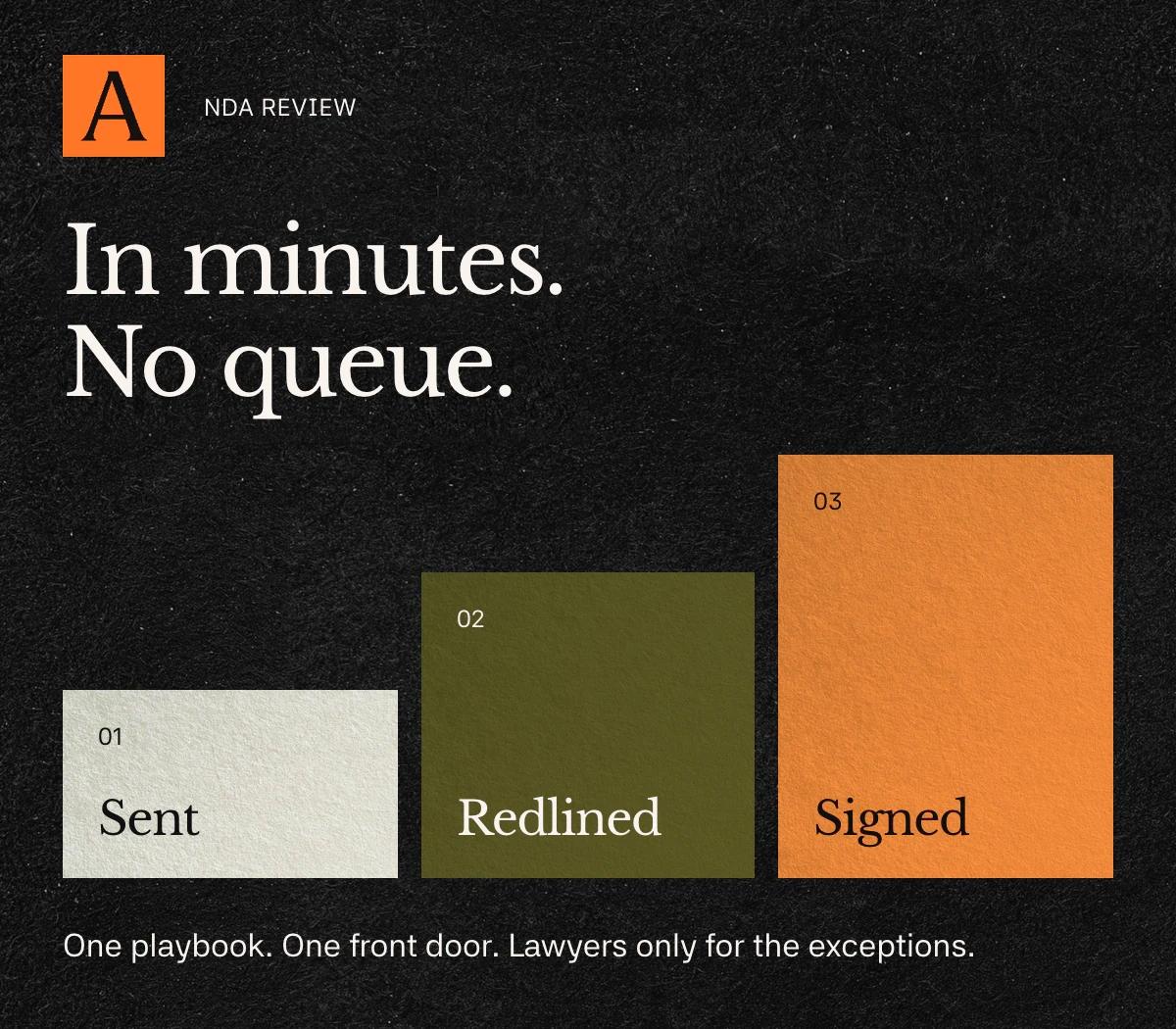
On volume work, Alaro reads every document in a data room and writes the report in your firm's format. Every figure is traced to its source. It also takes on the jobs around a deal, including matter trackers, questionnaires and getting documents signed and filed.
Our in-house lawyers monitor quality and double-check work that is escalated internally. That is different from a lawyer reviewing your particular matter. You can ask for a specialist review by a regulated, insured lawyer, and you approve its scope and fee first.
You can start free and send Alaro one task.
FAQ
Is AI safe for confidential client work?
It depends on the provider's terms. The questions are how data is encrypted, whether AI providers retain any of it, who can access it and whether it can be deleted. At Alaro, model providers are under zero data retention agreements, and nobody trains on your work.
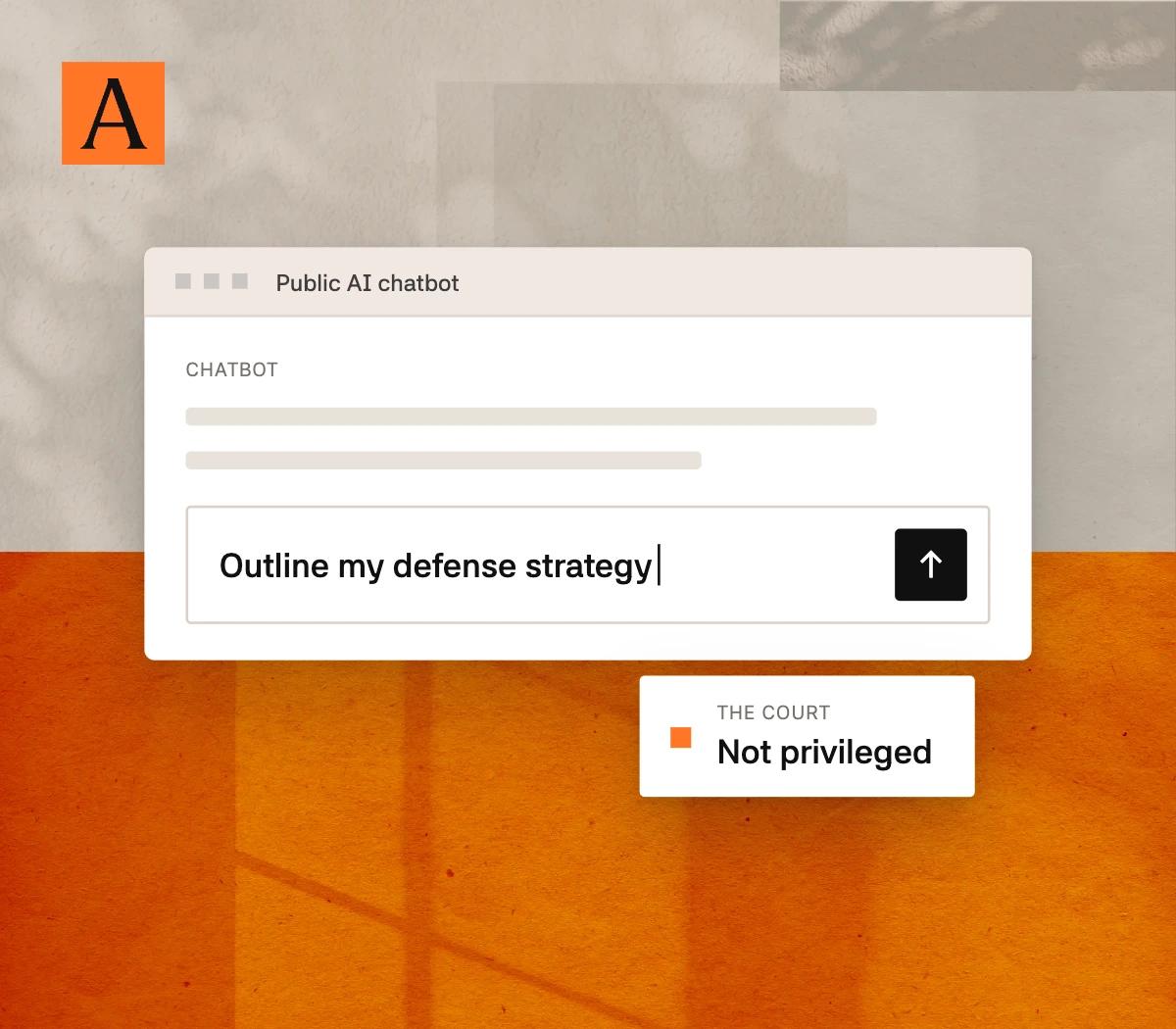
Privilege is a separate legal question, and it depends on the facts and the jurisdiction.
Will AI replace lawyers or paralegals?
We do not think so. AI is taking on repetitive process work, and judgment, relationships and complex matters still need people. In a 2026 survey of US legal professionals, most reported no change in lawyer or non-lawyer headcount because of AI.
How should a law firm start with AI?
With one kind of routine work that repeats, such as NDAs or the chasing on live matters. Note the time saved on the first version and the time spent checking it. AI for lawyers is worth keeping when the second number is the smaller one.
Sources
- Clio, Clio's 2026 Legal Trends Report reveals record gains in billable time as AI reshapes law firm economics (press release), October 26, 2026.
- Morae, Only 33% of Legal Professionals Trust the Results of AI-Assisted Legal Work, Morae Research Finds (press release), July 8, 2026.