AI for in-house counsel is rarely a blank page. In many businesses, colleagues can already use AI tools before legal has set a rule for them.
The way to get ahead is to give colleagues a route they can use. That means an approved tool, clear rules for what goes into it and someone who checks what comes out. A few numbers then show the business what it has gained.
We think a ban is the weakest answer. A legal team that gives colleagues an approved way to get routine answers keeps more control than one that only says no.
Why can't in-house counsel wait on AI?
Outright bans are becoming rare. Among US respondents to a 2025 survey of in-house legal professionals, 9% said company policy prohibited generative AI, down from 29% a year earlier.
Where AI is allowed and legal has said nothing, each colleague decides alone what is safe to put into it. Someone with a contract to read by Friday is tempted to ask a chat tool. That is a decision about confidential information, made without the legal team.
The live question is which tool, and on what conditions.
What should in-house counsel settle first?
Three things. Who has approved the tool, what may go into it and who checks what comes out.
Who approves the tool?
Whoever answers for information security and data protection in the business, together with its most senior lawyer. In a small company, that may be the head of IT.
Approval names the tool, the type of account and the kinds of material that may go in. Before giving it, get clear answers to the questions to ask a legal AI vendor.
What may go into it?
The provider's terms answer most of this. They say whether it keeps what you enter, whether it trains on it and whether you can have it deleted. The answer can differ between a business account and a personal one.
A business cannot see how each employee has set a personal account, so approval usually names a business one.
Your own contracts answer the rest. An NDA or a customer agreement may limit where the other side's information can go. An AI tool is one more place it would be going.
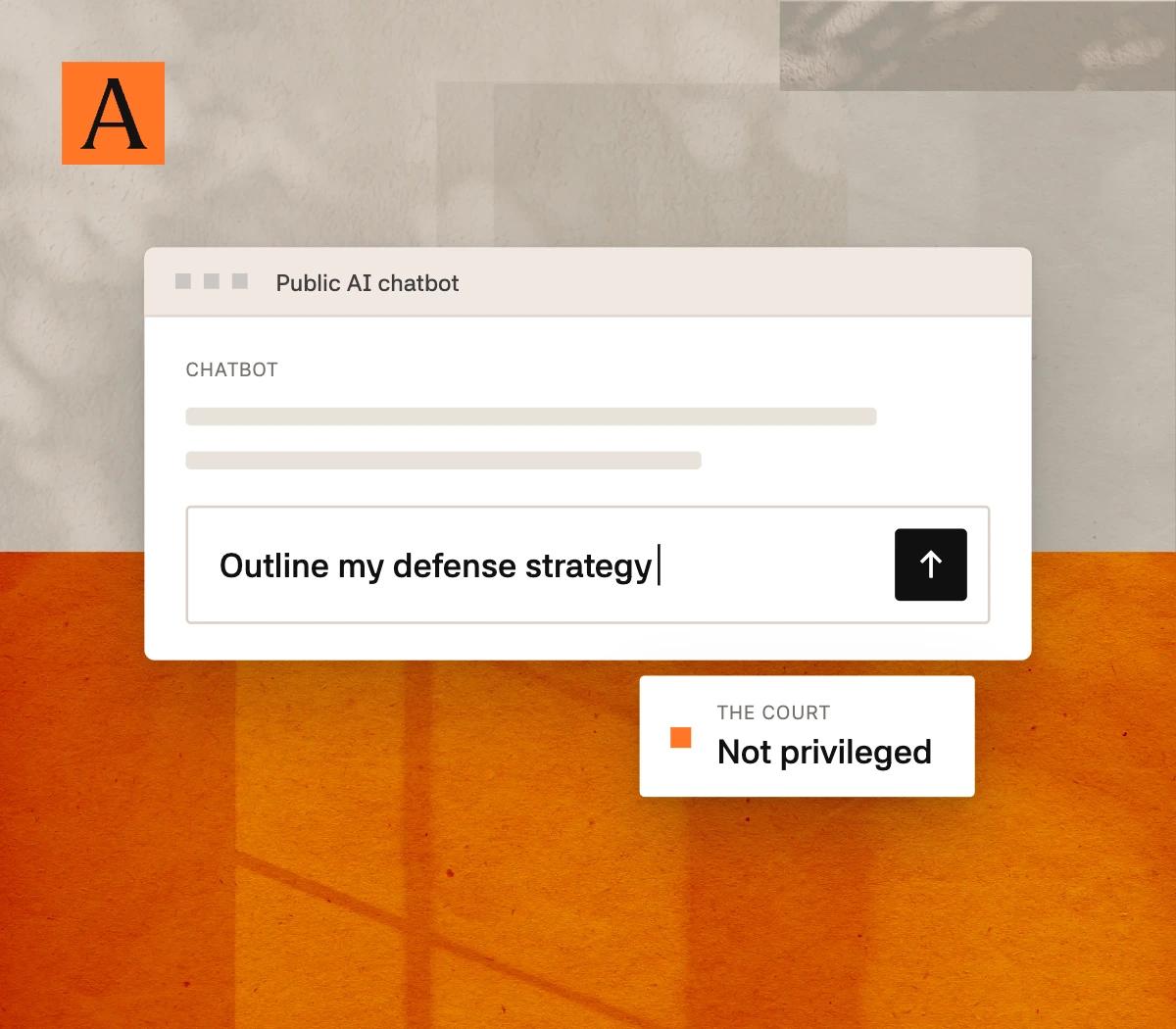
Privilege is a separate question from confidentiality. Courts have started to rule on it, and the early answers have turned on which tool was used and who directed the work.
Who checks what comes out?
A named person for each kind of work, with a level of review agreed in advance. Routine work on agreed positions can take a lighter read. Anything new gets a full one.
Without that decision, the safe default is to re-read everything in full. The time the tool saved then goes into checking it.
Which requests can the business send straight to AI?
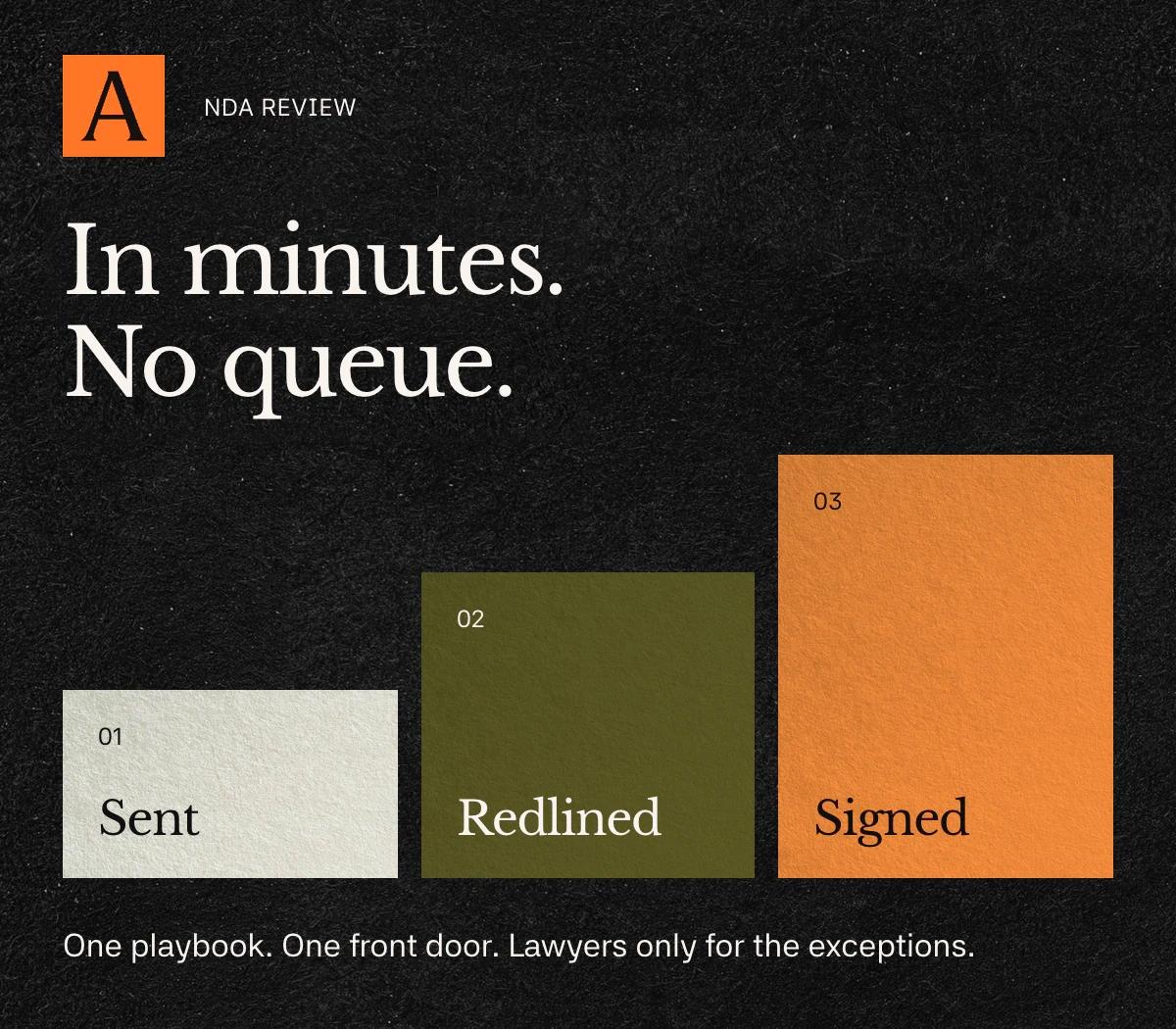
Routine requests that repeat and already have a written standard behind them. A common first choice is one kind of contract, such as NDAs or standard supplier terms. Routine questions with a settled answer are another.
Legal decides which requests can go straight to the tool, which positions it applies and what comes back for a decision. The unusual requests still reach a lawyer.
Two basics make this easier to hand over. Requests arrive in one place, and the team's positions are written down. AI works from what it is given.
How do you show the business that AI for in-house counsel is working?
By comparing a few numbers for the kind of work you started with, before the first task and again a month later.
- Time from request to answer. Whether colleagues get what they asked for sooner.
- Requests handled inside legal's rules. How many routine requests were answered without waiting for a lawyer.
- The lawyer's time on each item. Whether reading and correcting takes less time than doing the work did.
- What the lawyer had to correct. Whether the same mistakes repeat, and how much each would have mattered.
A 2025 survey asked 284 in-house legal leaders and legal operations professionals what they measure. Only 12% of in-house teams tracked the return on their technology. A team that keeps these numbers can show the business what AI for in-house counsel has changed.
If the numbers do not move, look at the scope first. The work may be too varied for a first job, or the review heavier than it needs to be.
A second kind of work is worth adding once the first runs without surprises.
Where does Alaro fit?
Alaro is a self-serve AI paralegal, built by lawyers, and we are an SRA-regulated legal AI company. It takes on routine work that repeats.
- For the business. Colleagues you allow can ask routine questions and get an answer with its sources.
- For contracts. Alaro reviews a contract against your playbook, and can build that playbook from your past deals.
- Before confidential work. Our trust page sets out how we protect your work. Model providers work under zero data retention agreements, nobody trains on your work, and you can export your data or request deletion, at any time.
- Who checks. Alaro asks before taking action outside your agreed boundaries. Our in-house lawyers monitor quality and double-check work that is escalated internally. A specialist review of your matter by a regulated, insured lawyer happens when you ask for it.
Consider legal AI software if your lawyers want a research or drafting tool to operate themselves.
You can start for free with one routine task.
FAQ
Will AI replace in-house counsel?
No. AI takes on tasks within the job, such as reading, first drafts and chasing, and the judgment stays with the lawyer. On a team that has never had a paralegal, an AI paralegal covers work the lawyer was carrying alone.
Does a small legal team need an AI policy before it starts?
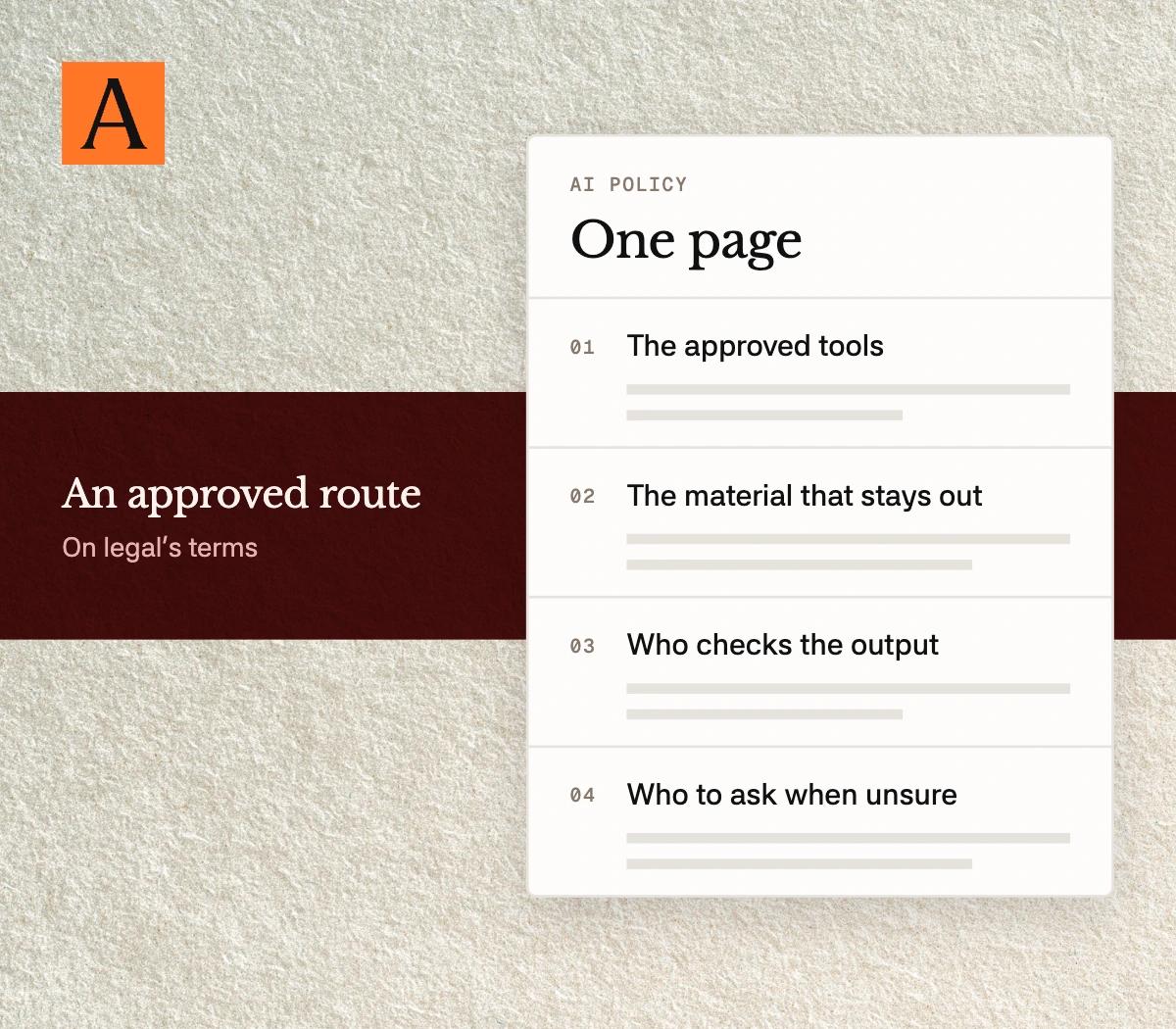
A short one is enough to start. One page can list the approved tools, the material that stays out of them, who checks the output and who to ask when unsure. It matters most for colleagues outside the legal team, who cannot be expected to know where the line is.
What is a poor first job for AI?
Work with no pattern. One-off, high-stakes advice and matters with no precedent belong with a lawyer from the start.
Sources
- Association of Corporate Counsel and Everlaw, Generative AI's Growing Strategic Value for Corporate Law Departments (press release for the report), October 14, 2025.
- Association of Corporate Counsel and Everlaw, The Role of Generative AI in Proving Corporate Law Department Value (press release for the report), November 17, 2025.
- Anthropic Privacy Center, Is my data used for model training? (commercial products), updated August 18, 2026.
- Anthropic Privacy Center, Is my data used for model training? (consumer products), updated March 16, 2026.